PUBLICATION
Munk, A. K., & Olesen, A. G. (2020). Beyond issue publics? Curating a corpus of generic Danish debate in the dying days of the Facebook API. STS Encounters, 11(1).
Full text available open access.
BibTex
@article{munk2020beyond,
title={Beyond issue publics? Curating a corpus of generic Danish debate in the dying days of the Facebook API},
author={Munk, Anders Kristian and Olesen, Asger Gehrt},
 journal={STS Encounters},
  volume={11},
   number={1},
    year={2020)
}
When Facebook announced its sweeping changes to the Graph API in 2018 (aka the APIcalypse in digital methods), Asger Gehrt Olesen and I decided to put a question to the test that had been nagging us for a while - a question that would become much more complicated to address after the without broad API access to page data.
The standard protocol for data collection in digital controversy mapping is to follow the issue. In short, this means harvesting data that uses certain issue-related keywords, and on Facebook specifically the only way to do that was to find groups and pages dedicated to those keywords. The problem with that, however, is that we do not know if the signals we see in the data are signals of the controversy or instances of some larger trend on the platform.
We therefore decided to build a dataset of Danish Facebook debate that was not issue specific. The Danish Facebook Atlas covers more 70,000 pages, including posts, comments and user interactions, over a 10-year period. It allows us to compare activity around controversial topics - in this case the HPV vaccine - with general patterns in activity, and it allows us to include issue-relevant discussions that do not take place on issue-dedicated groups or pages.
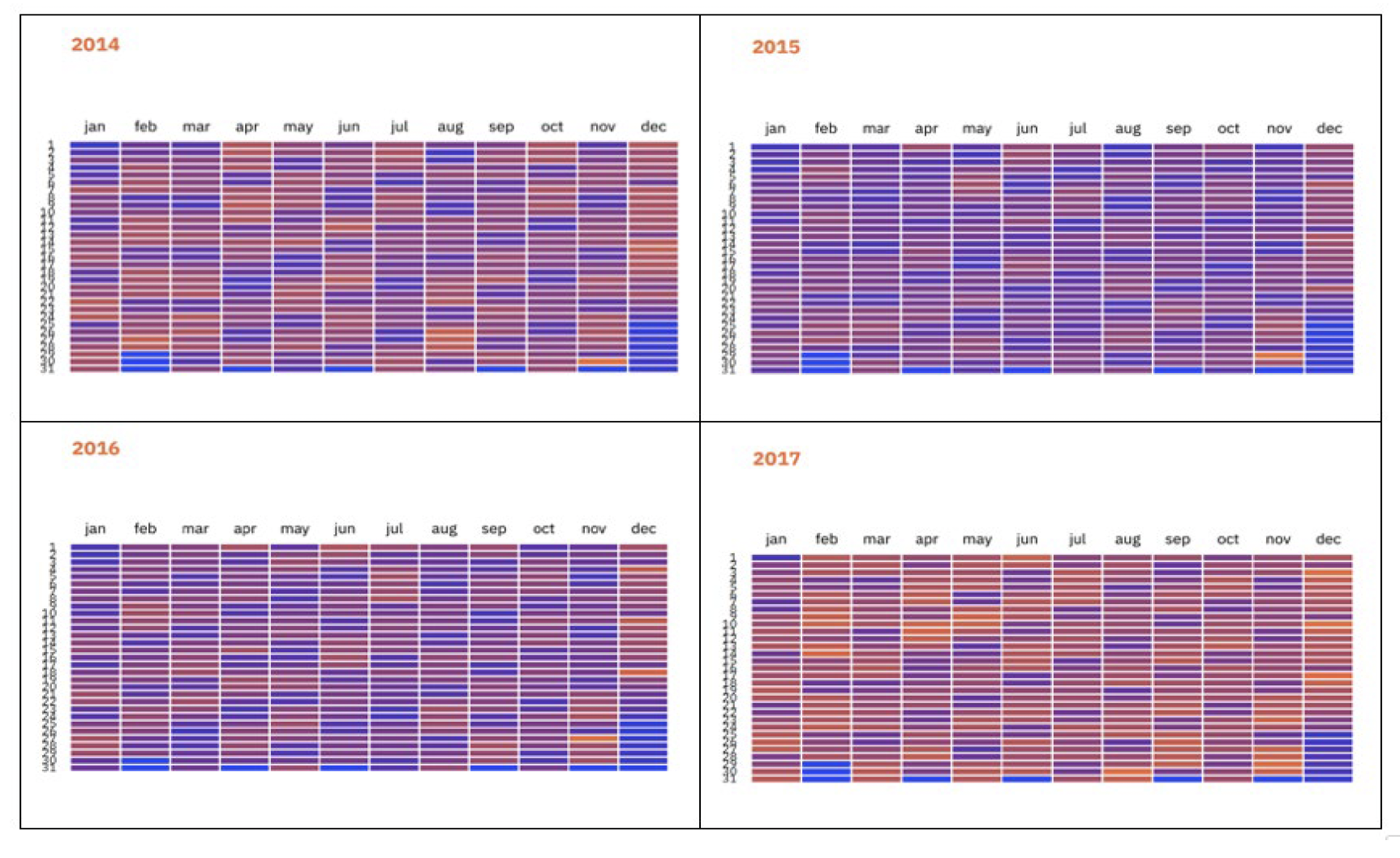 The paper is published as part of a special issue of STS Encounters - engaging the data moment edited by James Maguire, Henriette Langstrup, Peter Danholt, and Christopher Gad. As such, it also discusses the broader predicament of digital methods and digital STS in a time where platforms are increasingly asserting ownership and control over data.
p.65
The problem with mapping controversies in topically delimited datasets (…) is that we risk naturalizing any pattern we find as indicative of said controversy. Developments in activity over time in a set of tweets with the same hashtag are easily construed as having something to do with that hashtag (i.e. the dynamics of the controversy) but there is no way of knowing if the changes are actually reflective of some larger trend on the platform.
p.82
data collection based around issues risks missing important parts of a debate. It can lead us to mistake the rhythms of a medium or a national context for signals in a controversy. As an example, we showed how a conventional approach to capturing the issue public around the HPV debate on Facebook would have left us with a dataset that did not include the pivotal moment when skeptics and supporters of the vaccine began debating each other in the wake of a critical documentary.